
Van Zandt County Criminal History Checks
No one portal contains a complete Van Zandt County criminal history. Start with the event and the level of court. The County Clerk's authorized LGS search covers County Court at Law criminal matters. Felony files belong with the District Clerk for the 294th District Court. A jail entry concerns custody, while the arresting agency owns its report. The Texas Department of Public Safety holds the statewide repository layer. Each source has a distinct time line, scope, and legal meaning.
Gather the full name and spelling variants, an approximate filing or arrest year, and a case, incident, or booking number when one is known. Use a date of birth only through a channel that asks for it. Then follow the record trail in order:
- Search the County Clerk's criminal portal for a County Court at Law matter and keep the case number and disposition.
- Ask the District Clerk about a possible 294th District Court felony file, including older or archived material.
- Use the sheriff channel for present custody and the originating police agency for its arrest or incident report.
- Check the issuing court and sheriff directly when a warrant is possible; a missing web result is not clearance.
- Use the DPS public name search for the statewide public layer or a fingerprint personal review for your own identity-linked record.
Certified copies come from the clerk or agency that maintains the original. A screen view can guide a search, but it is not the same as a certified judgment or an identity-confirmed repository review.
Van Zandt County Records Counters
The county's record geography explains many failed searches. The County Clerk works from Room 202 at the courthouse and handles County Court at Law files. The District Clerk is in Suite 302 and maintains the felony court record. Sheriff and jail records are held at a separate West Dallas Street site. The Criminal District Attorney works from the South Annex and screens cases, but it is not the routine place to request a police report.
The official Van Zandt County homepage shows the courthouse that anchors this split system.
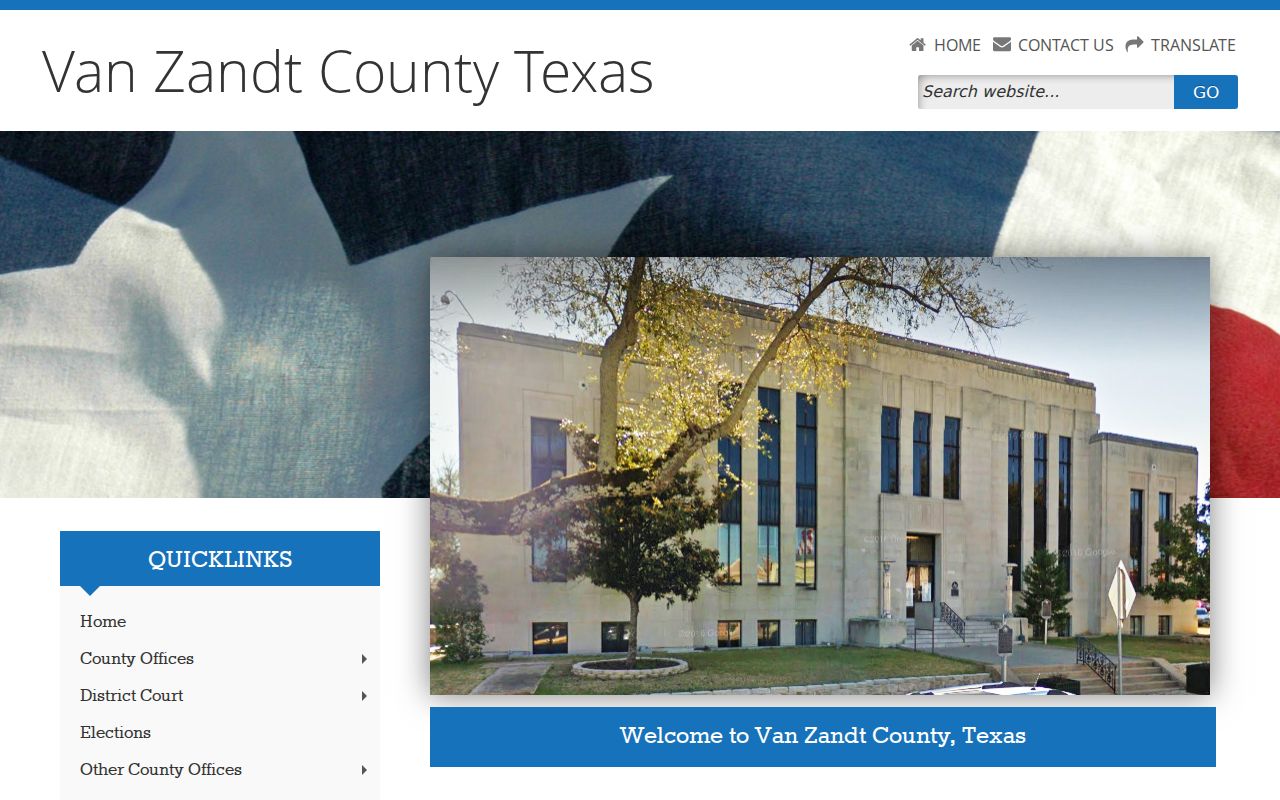
The image helps identify the county government source, while the office cards below show where each part of a Van Zandt County criminal record is actually kept.
County Clerk
121 E. Dallas St., Room 202
Canton, TX 75103
903-567-7555
Weekdays, 8:00 a.m. to 4:30 p.m.
District Clerk
121 E. Dallas St., Suite 302
Canton, TX 75103
903-567-7555
Hours are not posted
Sheriff and Jail
1220 W. Dallas St.
Canton, TX 75103
903-567-4133
Confirm counter rules first
Criminal District Attorney
400 S. Buffalo St.
Canton, TX 75103
903-567-4104
Charging and victim services
Official Background Checks in Texas
The Texas DPS Criminal History Name Search releases public conviction and deferred-adjudication information reported to DPS. It requires an account and prepaid credits. A name search can return a similar person or miss the intended match, so DPS places responsibility on the user to assess identity. Fingerprints are the only positive way to link a person to a Texas criminal-history record.
For an identity-accurate self-review, follow the DPS Personal Review process and schedule the proper fingerprint service through FAST and IdentoGO. The ordinary fingerprint transaction requested by another authorized agency does not automatically give the person a copy. The FBI Identity History Summary is another fingerprint-based self-review route for federal repository information. It does not replace a Van Zandt County clerk file.
| Official channel | Best use | Published base cost |
|---|---|---|
| Van Zandt clerk file | Outcome and documents in one local case | Copy price not posted |
| DPS public name search | Public Texas conviction and deferred data | $1 credit; card fees apply |
| DPS Personal Review | Your own fingerprint-linked Texas record | $15 check plus $10 FAST fee |
| FBI Identity History Summary | Your own FBI identity-history summary | $18 FBI fee |
Van Zandt County Portal Access
The County Clerk labels its LGS link as the criminal, civil, and probate online records search. The gateway offers Guest Login, so an account is not required just to enter. A user with an account instead sees email and password fields. After guest entry, choose Van Zandt County and the criminal dataset. The research could not verify the inner search labels, result cap, downloads, image prices, or coverage years, so those details should be checked in the live session.
| Gateway control | Type | Use | Verified detail |
|---|---|---|---|
| Email Address | Text | Account login | Forced to lowercase |
| Password | Password | Account login | Concealed entry |
| Guest Login | Button | Public entry | No paid account needed to enter |
| New Account | Link | Registration | Separate from guest access |
A no-result search may mean the case is a felony, a JP or municipal matter, an older paper file, or indexed under another spelling. Call the correct clerk before concluding that no Van Zandt County criminal case exists.
Kinds of Criminal Records
One event may create several official records. The law-enforcement report tells what officers alleged and did. The jail record tracks intake, bond, release, and custody. A clerk file shows the charge that was actually filed and how the court handled it. DPS compiles reported arrest cycles and dispositions. TDCJ maintains a separate state-custody and parole layer, while the Texas Public Sex Offender Registry follows Chapter 62 reporting rules.
- Arrest and booking records: accusation, agency, intake, bond, and custody facts, not proof of guilt.
- Court case files: complaints, indictments, motions, pleas, orders, judgments, and sentences.
- DPS criminal history: reported fingerprint-linked cycles, with a narrower public name-search product.
- Warrants: orders from a court that may not be exposed in a public web search.
- Supervision and registry records: court, CSCD, TDCJ, parole, and registration information with different access limits.
The detailed Van Zandt County arrest search explains how police paperwork and jail booking data diverge before a court case begins.
When Van Zandt County Records Fail
The Sheriff's official page links to a Current Inmate Listing, but the linked endpoint returned a 404 during the August 2026 research check. That failure is a web-access problem, not evidence that no one is held. Call the jail at 903-567-4133 for present custody. Ask the arresting agency for its report, then check the likely court after filing has had time to occur.
If the person has moved into state custody, use the TDCJ Online Inmate Search and IVSS by name, SID, or TDCJ number. That portal can show custody and release information and allows notification subscriptions. It is not a county booking log or a full criminal-history report.
Use the state locator only after deciding that state custody, rather than a recent Van Zandt County booking, is the question.
Van Zandt County Criminal Records: What They Contain
A Texas rap sheet is arranged around identity and arrest cycles. A court file is arranged around a cause number and its documents. A booking file is arranged around custody. Those designs explain why the charge label or status can differ across sources without any one screen telling the whole story.
| Name and identifiers | Reported name, aliases, birth data, SID or FBI number where applicable, and fingerprint identifiers in the repository. |
|---|---|
| Arrest and booking | Agency, arrest date, intake time, booking or SO number, charge stated at intake, bond, and release status. |
| Charges and statutes | The initial allegation, the prosecutor's filed charge, and the legal citation may appear at different stages. |
| Disposition | Dismissal, no-bill, acquittal, deferred adjudication, conviction, or another procedural end shown by the court. |
| Sentence | Confinement, fine, restitution, or community supervision ordered in a judgment. |
| Custody or supervision | County jail, TDCJ, parole, or court supervision information, each held in its own system. |
Read the judgment when the final outcome matters. A booking charge describes the start of the process, not its end.
Van Zandt County Warrant Records
No official public countywide warrant search was found. The safe route is court by court. Call the Sheriff, identify the court that may have issued the order, and check municipal courts separately for their matters. The four Justice Courts handle fine-only cases and magisterial work, including probable-cause decisions, arrest warrants, failure-to-appear complaints, and capias pro fines.
A case portal miss or broken inmate link does not clear a warrant. Ask the issuing court whether the warrant is active and what appearance, bond, or payment step applies. A capias pro fine may call for an indigency inquiry. A search warrant, arrest warrant, civil writ, and parole hold are not the same record and should not be folded into one label.
Texas Public Access Laws
The right channel depends on who made the record. An agency report follows the Texas Public Information Act. Ordinary case filings follow court law and clerk practice. DPS repository data has its own confidentiality and public-release rules. Registry records follow Chapter 62. A written public-information request should identify existing documents instead of asking an office to research or create a new answer.
Key Texas laws:
Government Code Chapter 552 gives access to public agency records while allowing stated law-enforcement material to be withheld.
Government Code Sections 411.083 and 411.135 govern DPS confidentiality and the public conviction and deferred channel.
Code of Criminal Procedure Chapter 55A sets the Texas expunction process.
Code of Criminal Procedure Article 62.005 makes most central registry data public but protects listed sensitive fields.
Section 552.108 may protect investigative detail. Basic information may still be released, and confidential identifiers or victim information can be redacted.
Van Zandt County Records Geography
Van Zandt County was formed in 1848. The present courthouse, the county's sixth, was dedicated in 1937 as a Depression-era work project. Its fifth floor once held the jail, but the jail moved to the Justice Center in 1991. An old reference to the courthouse jail is therefore historical, not a current destination for booking records.
The 1937 courthouse is a Registered Texas Historic Landmark and National Register property. County work on restoration and a possible new justice center means office locations should be confirmed before travel. The courthouse remains the clerk hub, while the sheriff, jail, and prosecutor occupy other sites. That physical split mirrors the way Van Zandt County criminal records are divided.
Restricted, Sealed & Expunged Records
Texas uses two main, distinct remedies. An expunction under Chapter 55A directs named agencies to remove, destroy, or return covered arrest records when the legal requirements are met. An order of nondisclosure generally blocks public disclosure of qualifying criminal-history information while leaving access for criminal-justice agencies and other entities named by law. A portal label such as dismissed does not establish eligibility by itself.
Begin with the complete Van Zandt County clerk disposition, charging paper, and arrest identifiers. A fingerprint personal review can show what DPS associates with your identity. Then analyze each charge under the applicable statute and file in the court the law designates. The county does not post a reliable local filing amount, so confirm cost with the clerk.
The District Clerk's official page provides the felony clerk contact and links for expunction and nondisclosure.
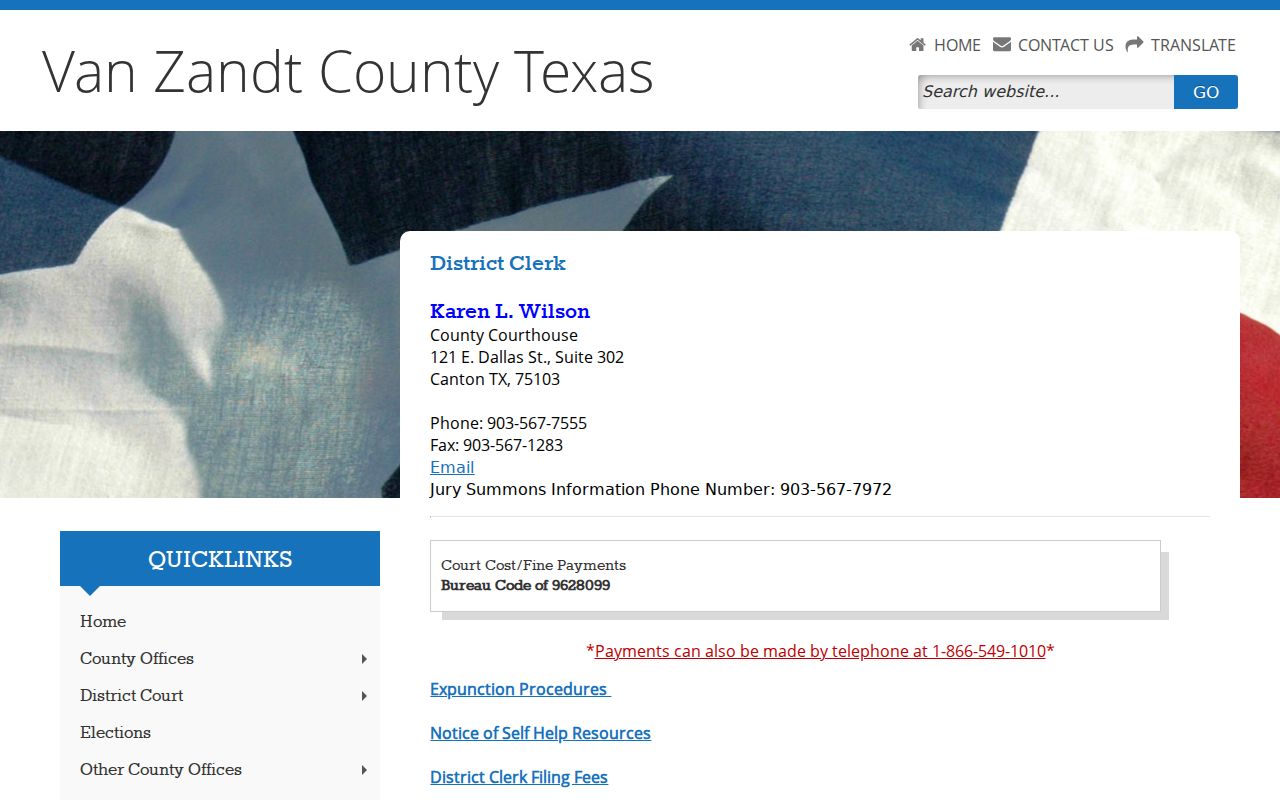
The source identifies the right county office, but eligibility still depends on the current statute and the full arrest episode.
Van Zandt County Custody Records
County jail, state prison, community supervision, and parole are separate statuses. The Van Zandt County jail holds local detainees, including many people awaiting case action. A court judgment establishes community supervision, Texas's term for probation, and the local CSCD manages it. TDCJ handles state custody, while the Texas Board of Pardons and Paroles makes release decisions and the TDCJ Parole Division supervises releasees.
The Texas Board of Pardons and Paroles service page is the official starting point for that decision layer.
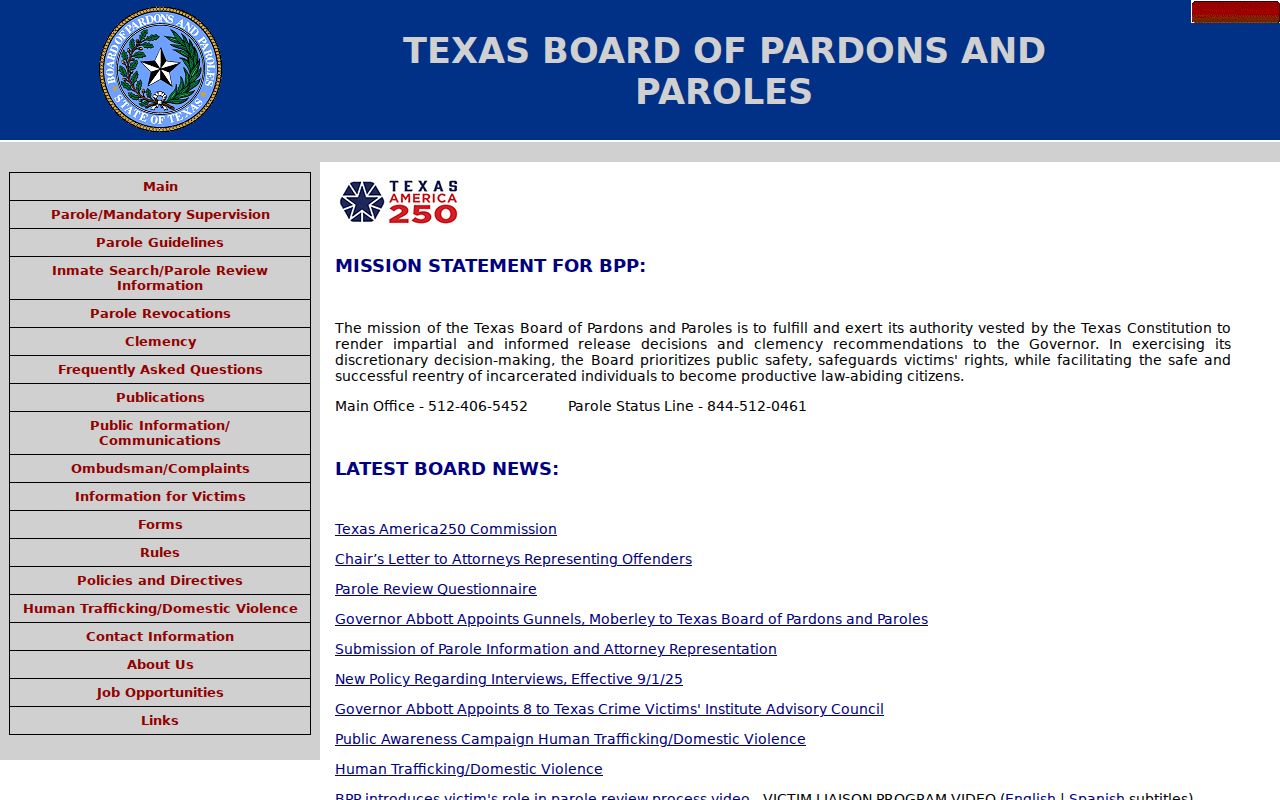
Van Zandt County maps to the Tyler District Parole Office in Region I, but the sentencing judgment remains the clearest public source for the original sentence.
Van Zandt County DPS Records
DPS receives arrest and disposition reports from Texas criminal-justice agencies. Delayed or missing submissions can leave an arrest cycle without its court outcome. If a statewide result looks wrong, obtain the clerk's authoritative judgment or dismissal, then follow DPS error-resolution instructions. A fingerprint personal review helps DPS decide whether the record belongs to the requester.
The public DPS Crime Records search shows the name-based entry point.
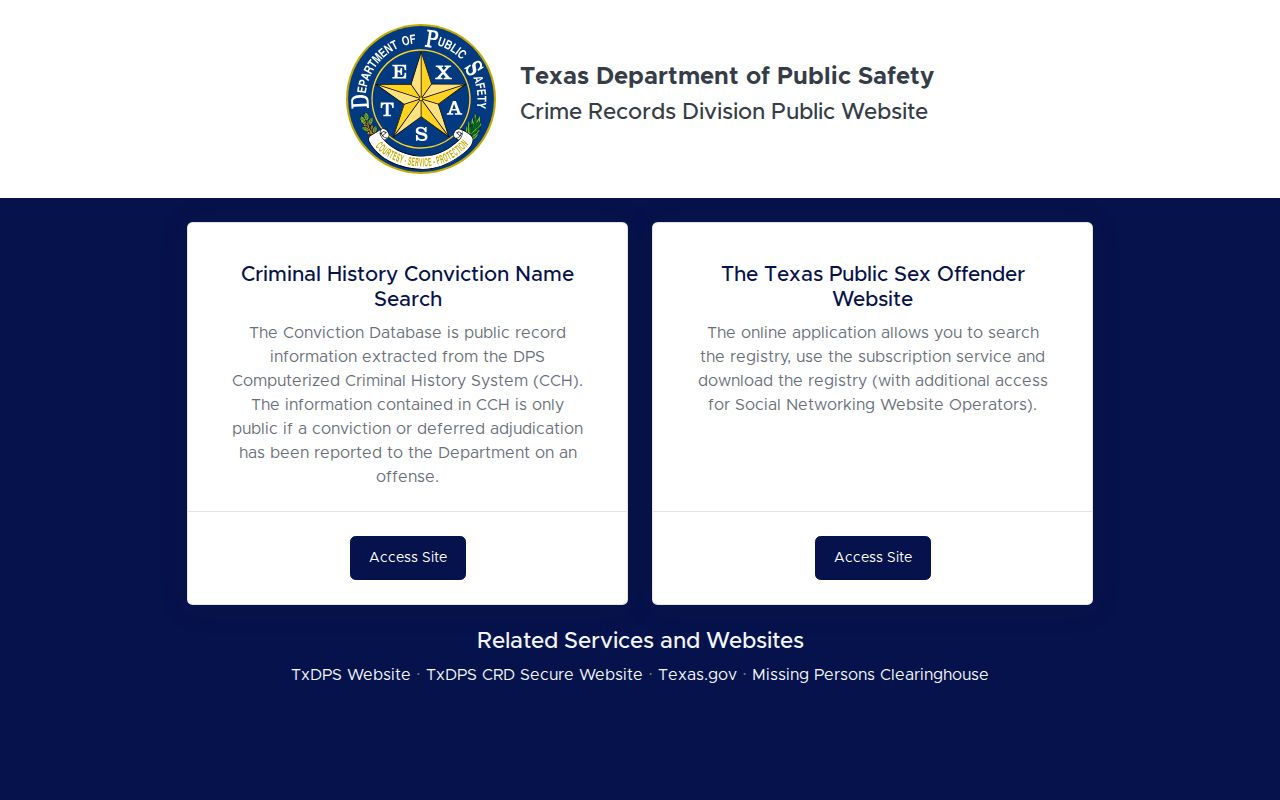
That search is limited to public conviction and deferred-adjudication data reported to DPS.
The broader DPS Crime Records Division hub separates public searches, personal review, fingerprints, and correction resources.
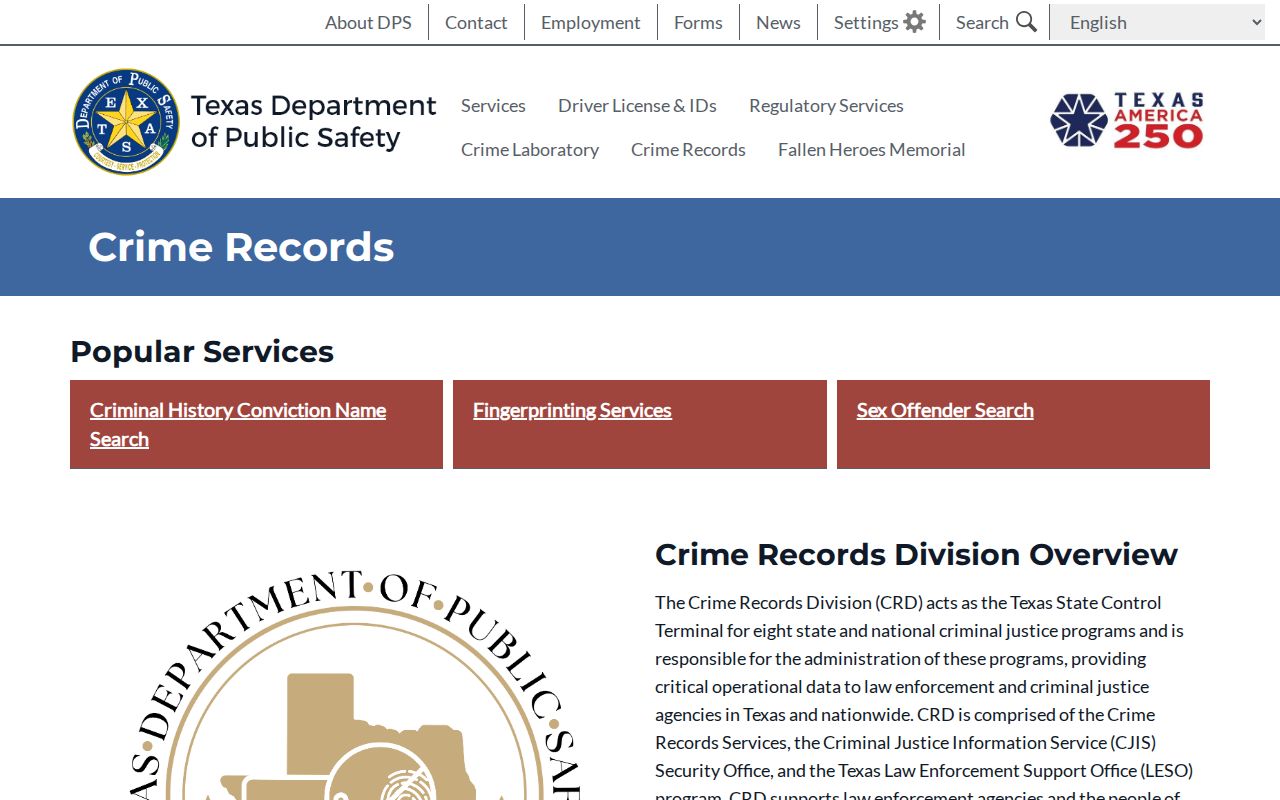
Choose the service based on the question, not merely the first search box found.
The official DPS Crime Records FAQ explains fees, fingerprint identity, timing, and corrections.
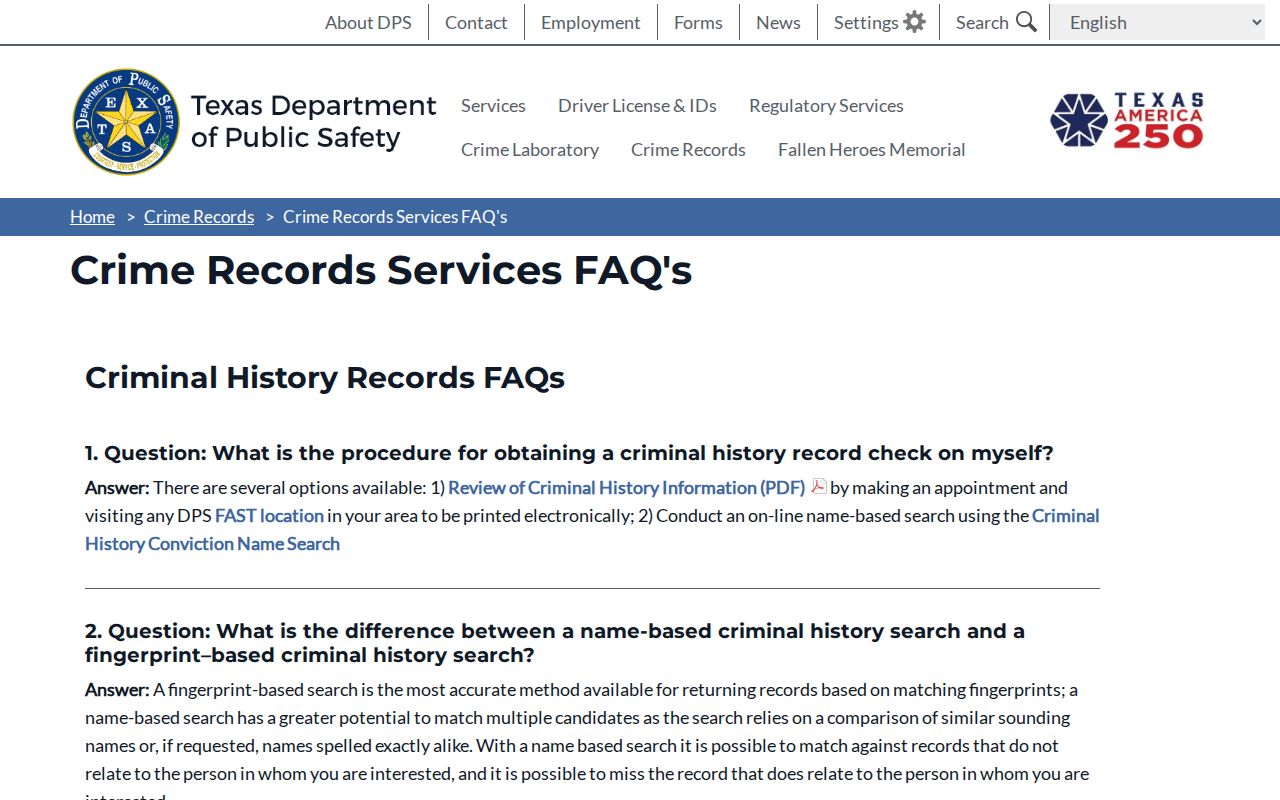
Its key distinction is simple: names can be ambiguous, but fingerprints provide positive identity.
Van Zandt County Record Terms
Local files use short terms that mark very different outcomes. Read them in the context of the filed case rather than treating every status as a conviction.
- Disposition
- The reported outcome or procedural end of a case.
- No-bill
- A grand jury declined to return an indictment on that presentation.
- Deferred adjudication
- Community supervision without a present finding of guilt, still public unless relief changes access.
- Capias
- A court order to take a person into custody after a trigger in an existing matter.
- Community supervision
- The Texas statutory term commonly called probation.
When a DPS entry lacks a disposition, compare it with the Van Zandt County clerk record and ask the responsible reporting office about correction.
Van Zandt County Charge Records
The arresting agency writes the report, but the Criminal District Attorney decides what county-level charge to present. A misdemeanor is commonly filed by information. A felony ordinarily moves through the grand jury, where at least nine of twelve jurors must vote for an indictment. Grand-jury deliberations remain secret, while a filed indictment becomes part of the court record unless restricted.
The official Criminal District Attorney page sets out the office contact, charging role, victim help, and agency links.
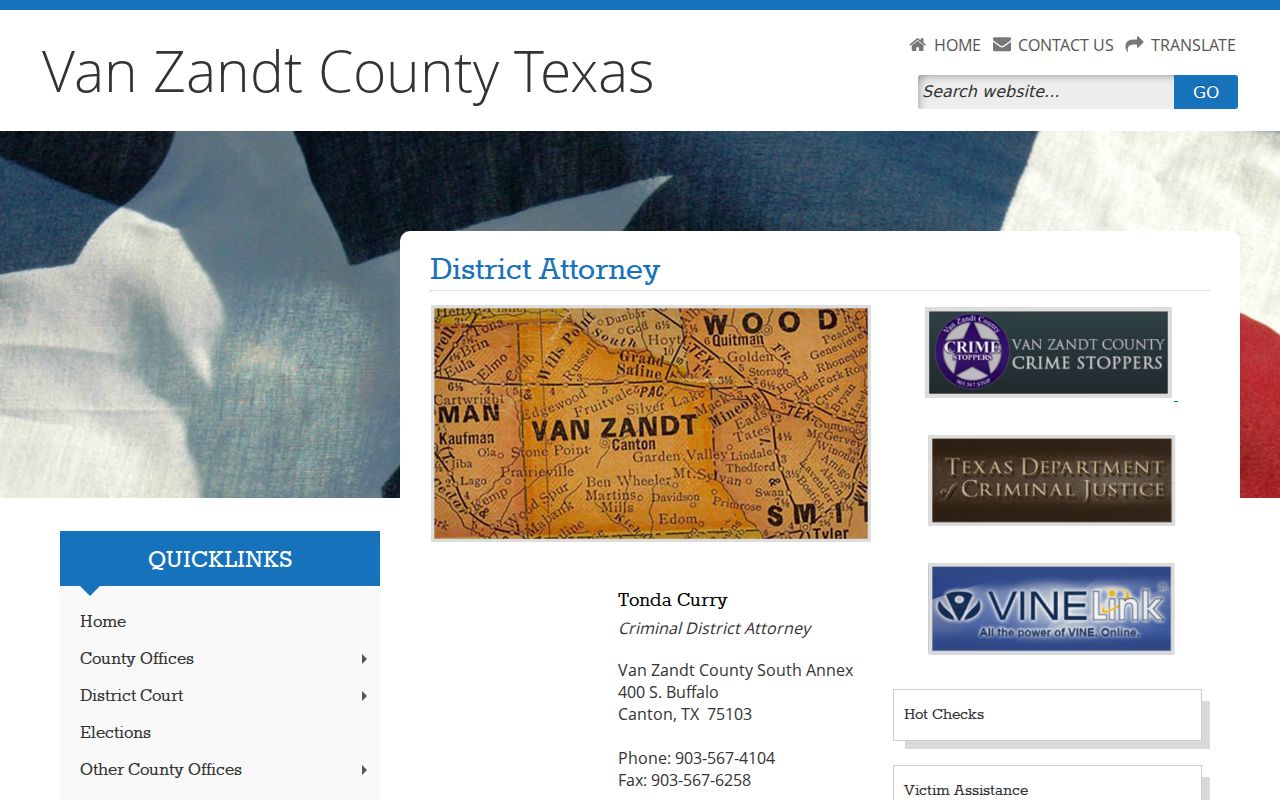
Police reports should still be requested from the agency that made them, not from the prosecutor as a general intake office.
City-by-City Criminal Records in Van Zandt County
Canton, Wills Point, and Grand Saline each keep police and municipal-court records through different local channels. City reports remain with the police department or city records office. Fine-only matters may stay in municipal court, while custodial bookings and higher-grade charges can move into Van Zandt County systems.
Canton Record Check
County seat with a city police request route, municipal court, and short-term city jail.
Wills Point Record Check
Police reports use direct or public-information channels, with distinct current and archive fees.
Grand Saline Record Check
The Police Records Department publishes a direct email and municipal court coordinator.
Start at the city when its police or court created the record, then follow a custodial or filed case into the correct county office.
Van Zandt County Federal Records
Van Zandt County lies in the Tyler Division of the U.S. District Court for the Eastern District of Texas. Federal court cases are searched through PACER, not the county clerk or DPS name portal. A federal custody question may lead to the Bureau of Prisons locator, while a personal federal identity-history review belongs with the FBI.
The FBI electronic Departmental Order portal shows the official self-review application route.
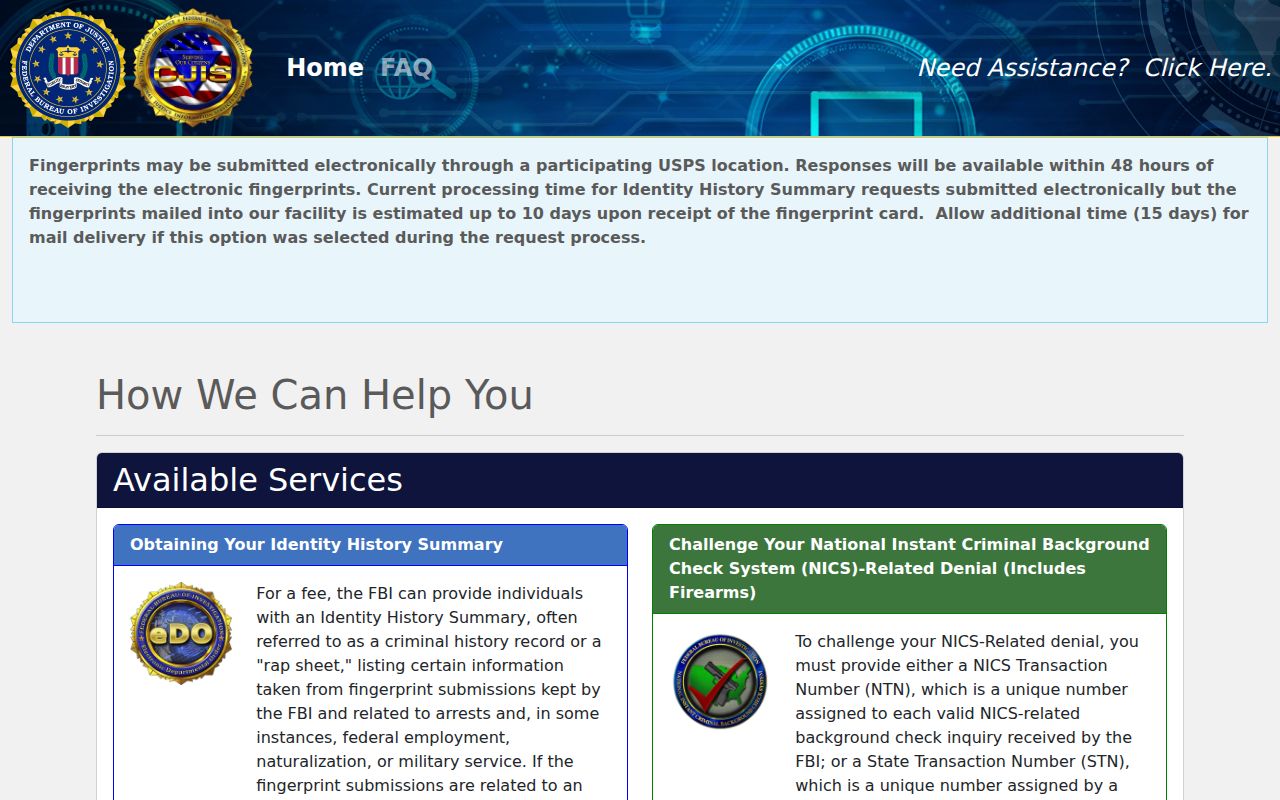
The application requires fingerprints and personal biographic details. It is not a way to order someone else's Van Zandt County record.